UNESCO Intangible Heritage of Haenyeo
What the 2016 Inscription Changed
file 01068 · Culture of Jeju Haenyeo (Women Divers)

Inscription Facts at a Glance
- Inscribed
- 2016 (11th Intergovernmental Committee)
- File Number
- file 01068
- Official Name
- Culture of Jeju Haenyeo (Women Divers)
- Decision Session
- UNESCO ICH 11.COM
- Protection Category
- Representative List of the Intangible Cultural Heritage of Humanity
- Cultural Form
- Free-breath diving · women-led community · generational transmission
In 2016, UNESCO added "Culture of Jeju Haenyeo (Women Divers)" to the Representative List of the Intangible Cultural Heritage of Humanity. The file number is 01068 and the decision was made at the 11th session of the Intergovernmental Committee (11.COM). This page unpacks exactly what the inscription means, which elements were recognized as heritage value, and how Korean haenyeo culture has been protected in the years since; based entirely on publicly available sources.
The UNESCO page describes the culture like this: "On Jeju Island, there is a community of women, some in their 80s, who make their living from harvesting a variety of shellfish by holding their breath and diving 10 meters under the sea without the aid of breathing equipment." The critical phrase is "without the aid of breathing equipment." A traditional method of entering the water without modern diving gear was itself recognized as the essence of the heritage; a rare model of sustainability by global standards.
The recognition rests on five elements: an environmentally friendly harvesting method, a self-organizing women-led community, mother-to-daughter transmission, integrated culture combining work songs and ritual, and an economic self-reliance model led by senior women. These five together form the "intangible" heritage value UNESCO recognizes. Unlike a specific monument or building, the protection covers practices, knowledge and expressions passed between people; the most important characteristic of this inscription.
Yeonhwa-ri, the village where the mothers of Busan's free divers work, is not named in the official title. What was inscribed is "Jeju Haenyeo Culture." However, the Korea Heritage Service (formerly Cultural Heritage Administration) treats Korean haenyeo culture as a whole within the framework of nationally protected intangible heritage: so the mothers of Gijang's Busan coast are placed inside the same protection stream. Since the inscription, academic research, documentaries, expanded museum collections and next-generation training programs have followed.
This guide focuses on unpacking the inscription background so that visitors can meet the village a little more deeply. Heritage continues only as long as people are alive to carry it, so we close with a paragraph on the kinds of support and etiquette visitors can bring. Common misconceptions about the UNESCO definition are addressed in the Q&A section as well.
The Five Heritage Elements UNESCO Recognized
Because they dive only on natural breath, the amount that can be taken at once is physically limited. As a result, the harvest intensity naturally stays within what the fishery can regenerate; a structurally sustainable model.
A self-organizing community running on a Sanggun / Junggun / Hagun (senior / middle / junior) rank, from village elders to newcomers. Inside the fishing cooperative, the women collectively decide fishing-ground rotations, dive-partner assignments and safety checks.
Oral transmission from mother to daughter and from older village sisters to younger ones. Tool handling, seafloor terrain, danger signals, breathing rhythm: all learned through the body, passed down in embodied form.
The work songs sung during and after diving, combined with village rituals praying for safety and abundant catches. Song and ceremony together are recognized as one integrated culture.
A rare model in which mothers from their 60s into their 80s continue economic activity through active labor. What makes this heritage distinctive is that age reinforces rather than diminishes its value.
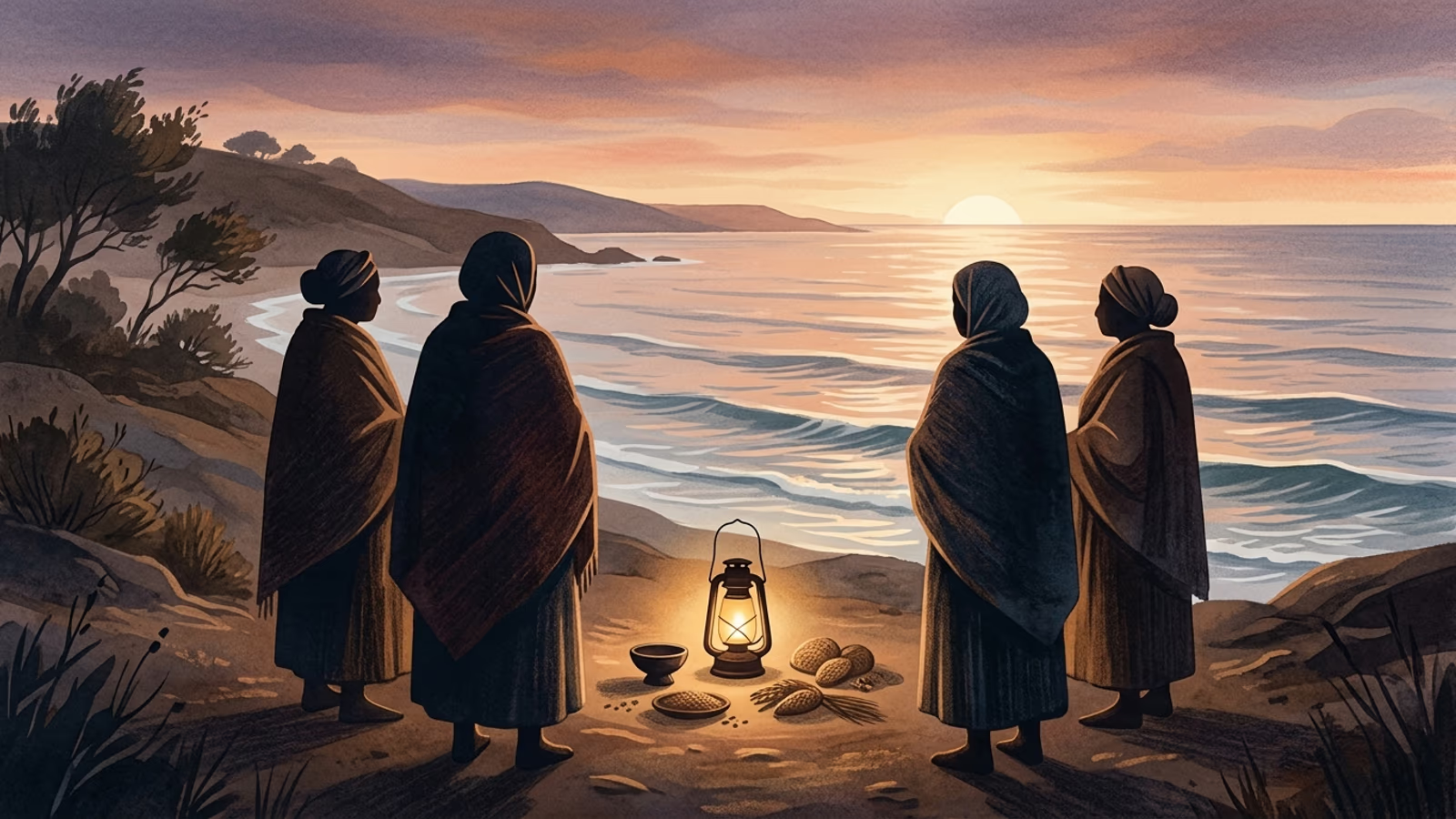
What the Inscription Actually Protects
Intangible cultural heritage inscription does not automatically bring direct government subsidies. Instead, the real effects unfold as follows.
- ◆National-level preservation duty (administered by the Korea Heritage Service, formerly Cultural Heritage Administration)
- ◆Higher priority for academic research and documentation projects
- ◆Broader international recognition, feeding into cultural tourism
- ◆Policy support for next-generation training programs
- ◆Expanded museum collections and systematic archiving of tools, garments and rituals
Are Busan Haenyeo Included in the Inscription? Q&A
Q. Does Busan appear in the official inscription name?
No. The official inscription name is "Culture of Jeju Haenyeo." Because the inscription specifies a regional name, Busan is not explicitly listed on the official record.
Q. So Busan haenyeo are outside the protection?
They are not outside the protection stream. The Korea Heritage Service treats Korean haenyeo culture as a whole within its framework of nationally protected intangible heritage, and the mothers of Busan's fishing cooperatives sit inside that same current.
Q. Has anything changed in Busan since the inscription?
Academic research, local-heritage cataloguing, tool archiving and local-press coverage have all followed. A formal haenyeo school for training successors has not yet been established in Busan, however.
Comparison with Japan's Ama
The two representative free-diving women's communities recognized in the UNESCO ICH context are Korea's haenyeo and Japan's ama. Both cultures share the same free-breath diving method, but there are clear differences in operational unit and harvesting structure.
| Axis | Korean Haenyeo | Japanese Ama |
|---|---|---|
| Operating unit | Communal work through the fishing cooperative | Individual work at the family level |
| Rule-making | Fishing ground and hours decided jointly in cooperative meetings | Decided within the family |
| Sales structure | Communal sales alongside individual sales | Individual sales-centered |
| Transmission | Village elder sisters teach nearby | Passed down inside the family |
The Shifts That Followed 2016
- 2017-2018Jeju's haenyeo school formalized its curriculum, and haenyeo culture experience programs for domestic and international visitors expanded.
- 2019-2020Haenyeo documentaries and book publishing accelerated, and the collections of the National Folk Museum of Korea and the National Maritime Museum grew.
- 2021-2022After the pandemic, fishing cooperative activities resumed and the mothers' diving rhythms found their footing again.
- 2023-2024On Jeju a modest rise in new entrants was observed. In Busan, informal cooperative-level transmission remains the only pathway.
- 2025-2026The reorganization into the Korea Heritage Service is accompanied by an ongoing overhaul of the national intangible heritage archiving system.
What Visitors Can Do
Intangible cultural heritage continues only as long as people are alive to carry it. What visitors can do is simple yet meaningful.
- 1Always ask consent first before photographing a mother who is diving or working
- 2Naturally support the fishing cooperative's economy by dining at village restaurants
- 3Take interest in haenyeo-related books and documentaries, and share the stories in conversation
- 4When posting fishing-village culture on social media, carry the village name and respect for the mothers' labor together
Frequently Asked Questions
Does UNESCO inscription come with prize money or subsidies?
No direct prize or automatic subsidy follows. What does follow is a national preservation duty and real effects such as prioritized academic research, cultural tourism resource development and expanded museum collections. This is the most common misconception about UNESCO inscription.
Did the number of haenyeo grow after the inscription?
Jeju saw a partial increase in new-generation entrants, but the overall population trend remains a decline. In Busan, only informal cooperative-level transmission remains, so new entrants are hard to quantify.
Are Busan haenyeo included inside "Jeju Haenyeo Culture"?
The official name does not explicitly name Busan. However, Korean haenyeo culture as a whole is treated within the nationally protected intangible heritage framework, so it is not outside the current.
Was it "haenyeo" the people or the culture that was inscribed?
The culture. UNESCO Intangible Cultural Heritage protects practices, knowledge and expressions passed between people; not specific individuals or monuments. Heritage continues only as long as the haenyeo mothers live and carry on this way.
Do similar diving-women cultures exist outside Korea?
Japan's ama are the representative counterpart. The free-breath diving method is shared, but ama operate at the family level rather than through cooperative communal work.
Have cooperative mothers been invited abroad?
Yes. Since the inscription, invitations to international intangible heritage conferences and demonstration events have grown. Most involve Jeju cooperatives, and Busan mothers receive comparatively less spotlight.
Can I read the inscription document directly?
Yes. The UNESCO ICH official page (file 01068) provides the decision and nomination text in English. Under the CC BY-SA 3.0 IGO license, you can freely quote it with proper attribution.
Where can individuals donate to support haenyeo culture?
The Haenyeo Museum in Jeju and cooperative support programs are the main channels. In Busan there is no dedicated donation window at the cooperative level; the most practical support is dining at village restaurants and naturally sustaining cooperative operations.
How can international travelers experience haenyeo culture?
Jeju offers official haenyeo experience programs and the Haenyeo Museum. In Busan, walking Yeonhwa-ri village during the diving hours in the morning and afternoon, and dining at family-run seafood restaurants, offers the most authentic encounter.
How is the inscription record kept up to date?
The UNESCO ICH page is updated when the state parties submit periodic reports (typically every 6 years). Korea's next report will document changes since 2016 in domestic protection measures and community transmission activities.
If you have taken in the meaning of the UNESCO inscription
If you are curious how the meaning of UNESCO inscription flows into the mothers' daily work at the village restaurant, take a look at the main page with 51 years of village storefront tradition, the four signature dishes, seating and reservation notes.
→ Open Jangssi Haenyeo-jip main branch guideHeritage Continues Only While People Live
The 2016 UNESCO inscription confirmed the global value of haenyeo culture, but the real continuation depends on whether the fishing cooperative mothers' daily lives continue. When visitors meet the village with respect and dine naturally at the local shops, that flow itself becomes one axis of heritage protection. This page is updated at the start of each month against the UNESCO official page and the Korea Heritage Service notices. When newly confirmed facts appear, we quietly refine the paragraphs to reflect them.
Open UNESCO ICH file 01068 official page →Sources · Update
- UNESCO ICH page for Culture of Jeju Haenyeo (file 01068, CC BY-SA 3.0 IGO)
- Korea Heritage Service (formerly Cultural Heritage Administration) intangible heritage notices (KOGL Type 1)
- Wikipedia "Haenyeo" (CC BY-SA 4.0)
Last review 2026-07 · Cross-checked against the UNESCO official page and Korea Heritage Service notices at the start of each month.