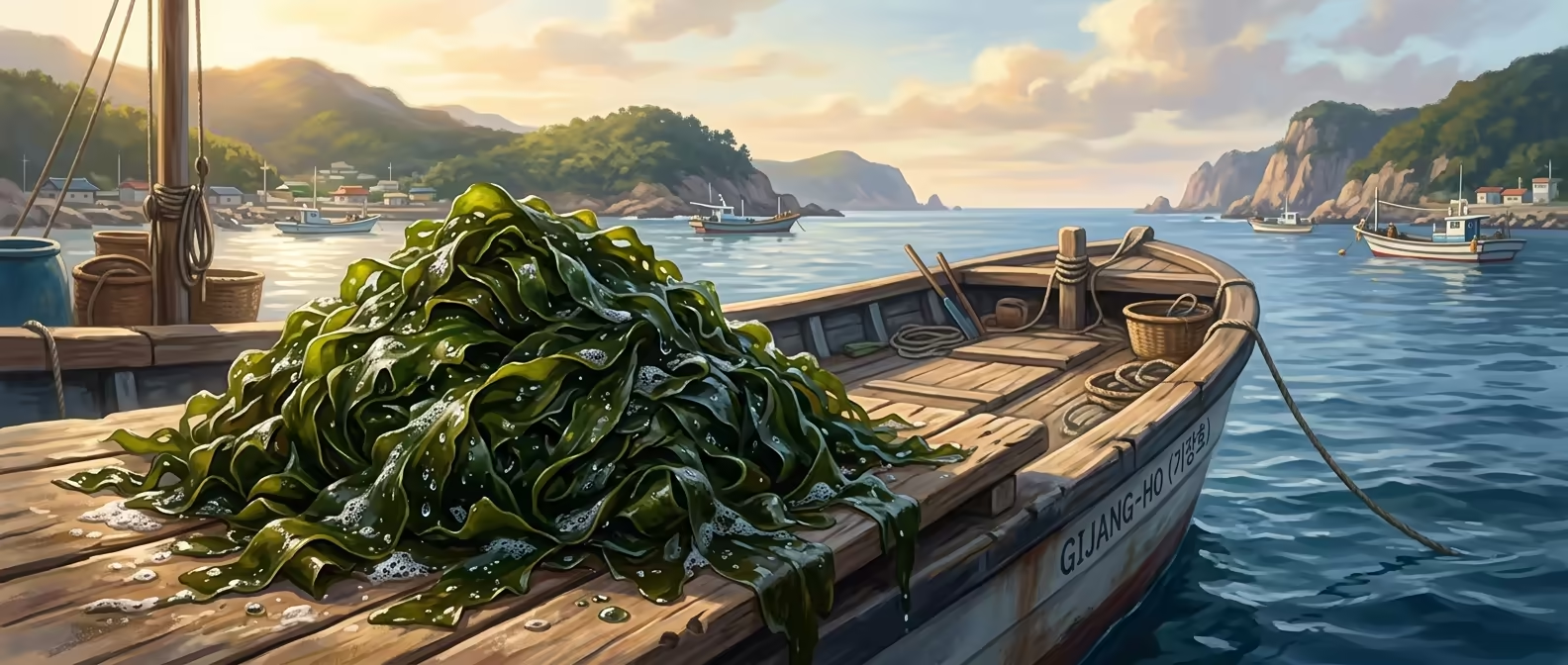
Gijang Seaweed Complete Guide
Busan Gijang Miyeok: 12-Month Harvest Calendar & Nutrition Analysis
Gijang Specialty · Geographical Indication No. 6 Certified
Have you ever wondered why Gijang Miyeok (Gijang Seaweed) is celebrated as the finest in all of Korea?
From a 12-month harvest calendar to detailed nutritional data backed by research —
here’s everything you need to know, explained in plain English!
Who wrote this guide?
This guide is built on the hands-on experience of a veteran fisherman who has worked these very waters for 51 years. We also cross-referenced official publications from NIFS (National Institute of Fisheries Science) and the Ministry of Oceans and Fisheries to verify every claim. You can trust what you read here!
📋 What we’ll cover today
- 01What is Gijang Miyeok? — Why Korea’s #1 seaweed is so special
- 02How is it rated nationwide? — Proven by statistics & certification
- 03Why does this particular ocean produce the best? — The science
- 04Full nutrition breakdown — Why it’s called a superfood
- 0512-month harvest calendar — When is the best time?
- 067 delicious ways to enjoy it — From soup to dessert
- 07How to pick the best quality — Expert tips
- 08Frequently asked questions
Gijang Miyeok (Wakame) — What is it?
It’s a type of brown algae (kelp family) that grows in the ocean. If you’ve ever celebrated a birthday in Korea, you’ve likely tasted miyeok-guk — a traditional seaweed soup served to mark the occasion. In Japan it’s called wakame (わかめ), and in China it’s known as 裙带菜 (qúndaicài).
But here’s the thing: where the seaweed grows makes a world of difference in flavor and quality. Just as certain wine regions produce superior grapes, the eastern coast of Busan has earned a reputation for producing the very finest seaweed in Korea.
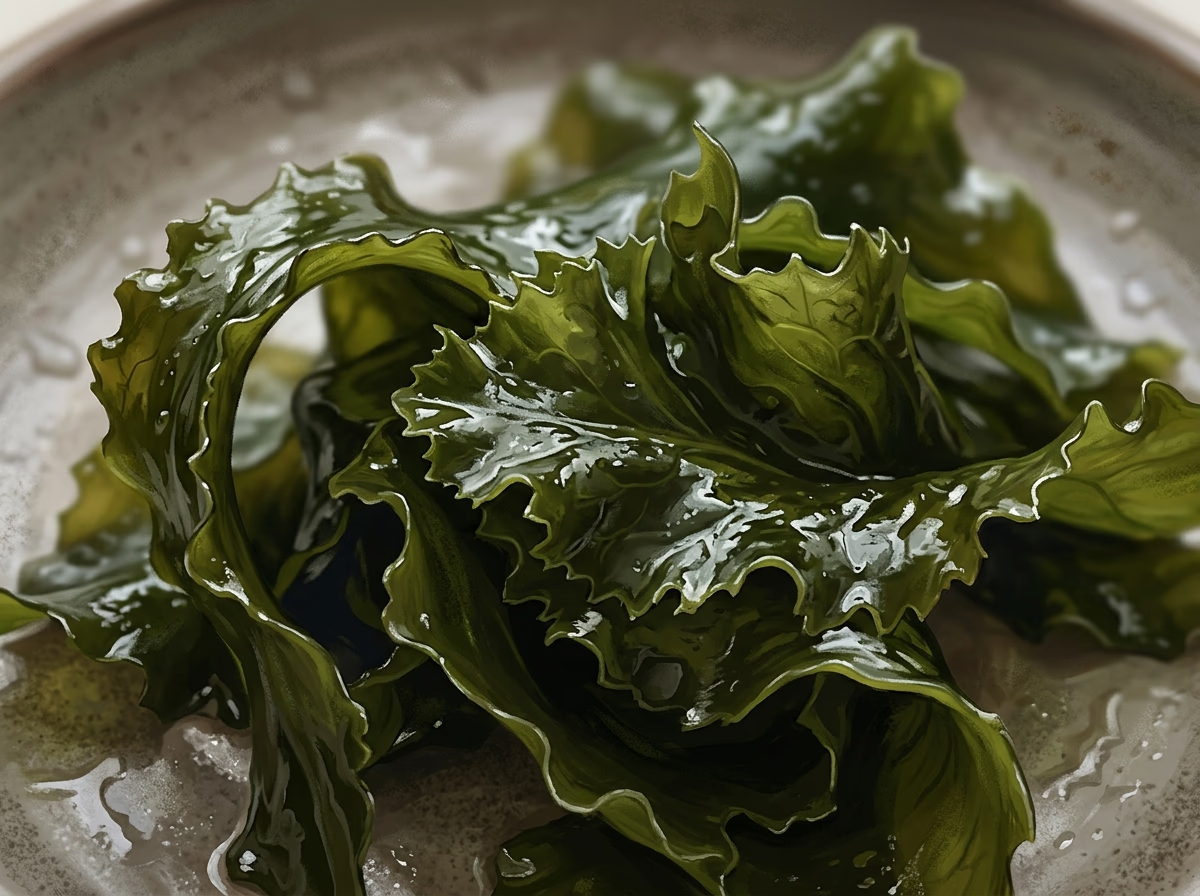
The standout characteristic is that the leaves are thick, chewy, and hold their texture even after prolonged boiling. Ordinary seaweed from other regions dissolves quickly in hot broth, but Gijang’s variety stays firm and pleasantly springy throughout cooking.
There’s more: the deep ocean aroma and natural umami are so pronounced that you barely need any additional soup stock. That’s exactly why professional chefs across the country seek out this particular variety.
3 reasons this seaweed is extraordinary
Geographical Indication Certification — Government-verified quality
Registered as Seafood Geographical Indication No. 6 in 2012. This means the Korean government officially recognizes that only seaweed harvested here can carry the Gijang name — much like Champagne can only come from France’s Champagne region.
Thick leaves + firm texture = won’t dissolve when boiled
Cold ocean currents cause the leaves to grow slowly, resulting in dense cellular structure. While other varieties break apart after 5 minutes of boiling, Gijang seaweed stays chewy even after 30 minutes of simmering.
Hand-harvested by skilled fishermen — a time-honored tradition
Rather than using machines, experienced fishermen dive into the water and carefully select each piece by hand. This ensures consistent quality and protects the ocean ecosystem since roots are left intact.

How is it rated nationwide? — Proven by data & certification
When Koreans hear "seaweed from Busan’s eastern coast," the universal reaction is: "Oh, that’s the premium stuff!" This reputation isn’t just word-of-mouth — it’s backed by hard numbers and government certification. Let’s look at the evidence.
Seafood Geographical Indication No. 6
The Korean government officially certified that only seaweed from this area can carry the Gijang name. Out of thousands of seafood products nationwide, only a select few have ever received this prestigious designation.
Approx. 15% of national brown algae output
Roughly 15% of Korea’s entire brown algae production comes from this single area. For such a small stretch of coastline, that’s a staggering figure — a testament to just how ideal these waters are.
Annual production value exceeding ₩80 billion
The local seaweed industry generates more than ₩80 billion per year. For a single type of seafood product, this is an unmatched economic scale anywhere in the country.
Price premium of 2–3x
When comparing the same weight of dried product, Gijang seaweed sells for 2–3 times more than other regions’ products. Yet demand still outstrips supply every year. When people pay a premium willingly, there’s a good reason.
“Even department stores in Seoul set up dedicated Gijang corners. Customers check the origin first and won’t buy if it’s not from here. I’ve watched this ocean for over 50 years, and demand grows every single year.”
— Local fisherman (51 years of experience)
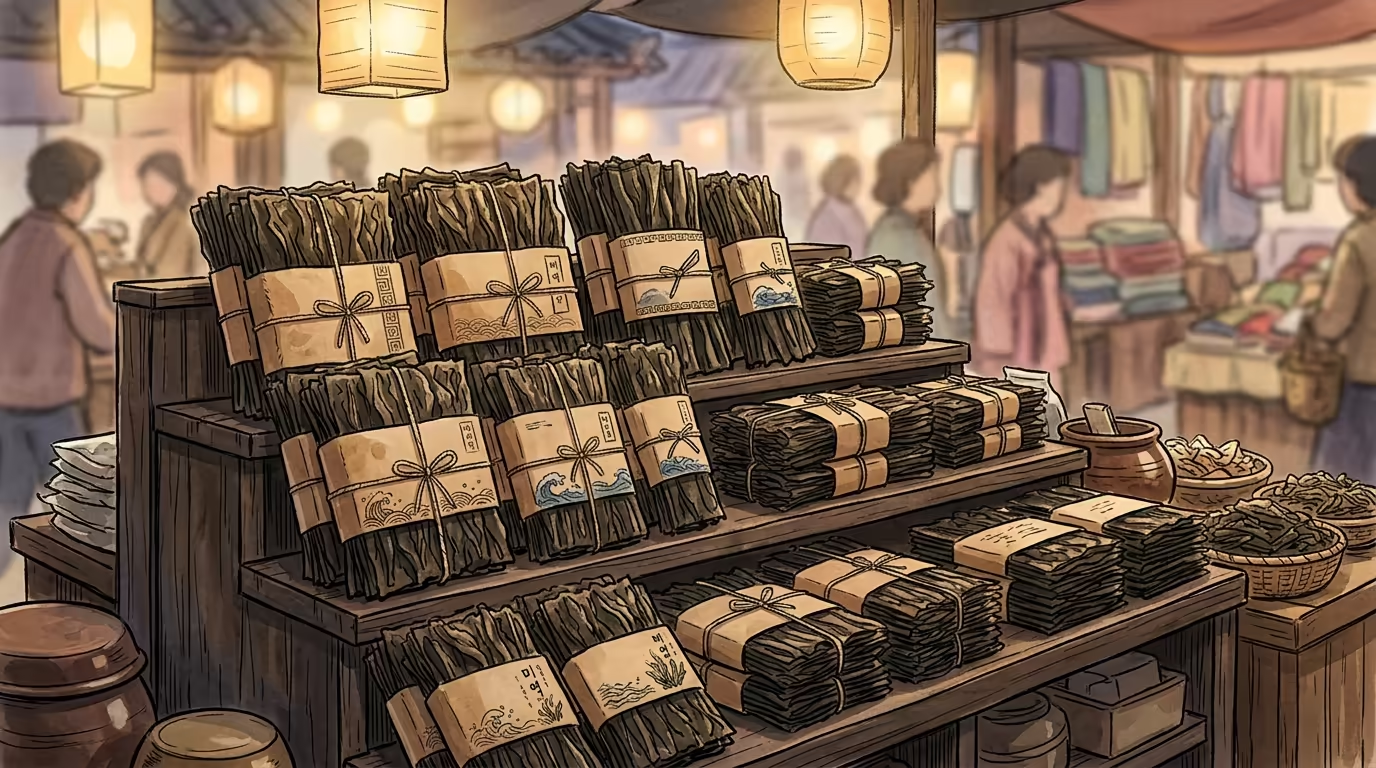
“A single strand raised by cold currents holds the essence of the entire ocean. Dry it in the sunlight, and it feeds the whole family’s table for an entire year.”
— Local fishermanWhy does this particular ocean produce the best? — The science explained
Just as the best fruit grows in the richest soil, the ocean environment is the decisive factor for seaweed quality. The waters off Gijang offer near-perfect conditions for brown algae cultivation.
First, the cold North Korean Current along Korea’s eastern coast meets the warm Kuroshio Current from the south right at this spot. According to NIFS, the 10–15°C temperature range created by this convergence is optimal for brown algae growth. Cold water forces the leaves to grow slowly, building dense cellular structure, while the warm current delivers nutrient-rich minerals.
Second, this area experiences upwelling — a phenomenon where deep, cold water rises to the surface. This water is loaded with nitrogen, phosphorus, and silica. It’s essentially the ocean fertilizing itself!
Third, the coastline features extensive rocky terrain. Seaweed anchors its roots firmly to rocks and grows while being buffeted by waves — like a natural workout that produces thicker, chewier leaves. Rocky-bottom seaweed is far superior to the sandy-bottom variety.
Finding all three conditions at a single location is extremely rare along Korea’s entire coastline. Research shows that brown algae from these waters are 1.5–2x thicker on average, with alginate content over 20% higher compared to the same species grown elsewhere.
Cold water forces slow growth, creating dense leaf structure. Warmer water makes leaves grow faster but thinner and weaker.
Where two currents meet, they create mineral-rich waters. Globally, such convergence zones are known for producing superior marine products.
Anchored to rocks and tempered by waves, the leaves grow thick and resilient. That’s why they hold their texture through extended cooking.
Full nutrition breakdown — Why it’s called a superfood
In Korea, miyeok-guk (seaweed soup) is the very first meal a new mother eats after giving birth. This isn’t just tradition — it’s wisdom backed by modern science. Let’s explore what makes each strand so nutritionally remarkable.
Calcium
960 mgStrengthens bones and teeth. Especially beneficial for growing children!
Iodine
1,610 μgSupports a healthy thyroid gland, which acts as the body's energy management system.
Dietary Fiber (Alginate)
35.2 gCleanses the digestive system and helps flush out bad cholesterol from the body.
Iron
6.9 mgEssential for producing healthy blood cells. One key reason new mothers in Korea traditionally eat miyeok-guk after childbirth.
Magnesium
760 mgHelps muscles relax and promotes restful sleep.
Potassium
6,800 mgHelps expel excess sodium from the body, reducing water retention and bloating.
The real reason new mothers eat seaweed soup — science confirms tradition
After childbirth, the body loses significant amounts of iron and calcium. Miyeok contains roughly 3 times the iron of spinach and 7 times the calcium of milk, helping replenish these nutrients rapidly. Alginate also aids in flushing waste from the body, while iodine supports hormonal balance.
According to research published in the Korean Journal of Nutrition, mothers who consumed seaweed consistently for 4 weeks postpartum showed approximately 40% lower rates of anemia. Ancient wisdom, confirmed by modern research.
Gijang Seaweed 12-Month Harvest Calendar
Conditions change with every season. Fresh product straight from the ocean is at its finest from February through May, while dried and salt-preserved products can be enjoyed year-round. Here’s what happens in these waters each month.

Let’s look at each month in detail
Baby sprouts are growing steadily in the winter sea. Although not yet harvested, you can enjoy the umami richness of dried or salt-preserved products from last season.
The very first harvest begins! The leaves are thin and silky: lightly blanched and dipped in chojang (vinegar-pepper sauce), they burst with the aroma of spring tides.
Flavor and nutrition reach their finest equilibrium. Packed with alginate and minerals, a bowl of soup made from these leaves yields an incredibly deep, rich broth.
Peak harvest season! The leaves grow thick and wonderfully chewy; local fishermen eagerly wait for this window all year long.
The final harvest window. Thicker leaves deliver a satisfying chew, and when dried, they produce the finest preserved product to enjoy throughout the entire year.
Freshly harvested leaves are dried in the ocean breeze. The combination of sunlight and sea wind creates naturally dried products with an extraordinary aroma.
The ocean rests briefly during this period. Dried or salt-preserved products from this year make a refreshing chilled soup; a beloved summer delicacy.
A bowl of cold miyeok-guk (seaweed soup) banishes the summer heat instantly. Mixed with cucumber in a sweet-tangy dressing, it makes a delightful side dish.
Fishermen lower spore ropes into the sea to prepare for the coming year. This marks the beginning of a brand-new cycle.
Tiny spores attach to ropes and begin growing beneath the waves. The careful attention of fishermen during this stage determines next year's quality.
Young leaves absorb the cold seawater and begin growing rapidly. Frigid temperatures help pack each leaf with concentrated nutrients.
Winter currents deliver generous minerals to the growing leaves. They absorb every bit of nourishment in preparation for the spring harvest.
“When you dry the April harvest in the ocean breeze, its fragrance fills the entire village. That’s our signal that spring has truly arrived.”
— Local fisherman7 delicious ways to enjoy it — From soup to dessert
It’s not just soup and salad! This versatile ingredient can transform into a surprising range of dishes. From beginner-friendly classics to creative specialties, let’s explore them one by one.
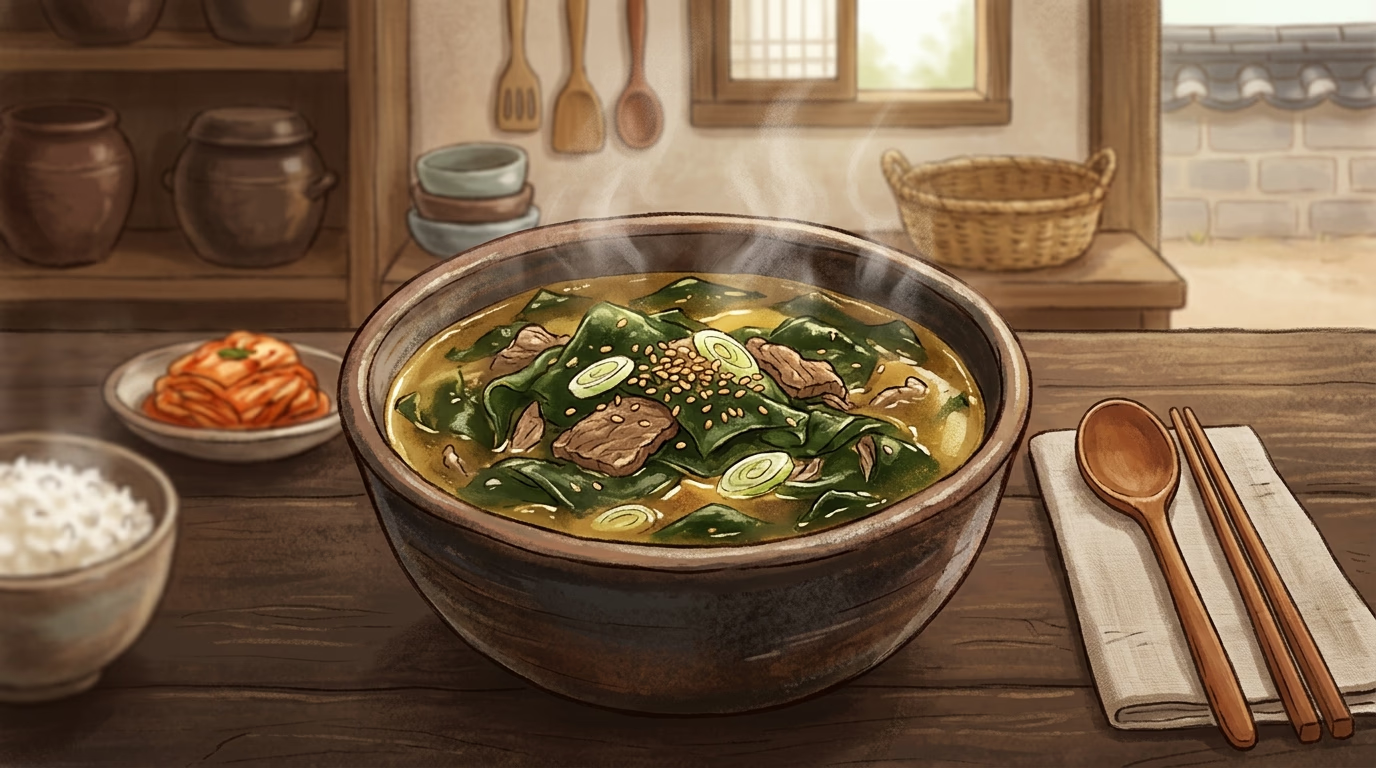
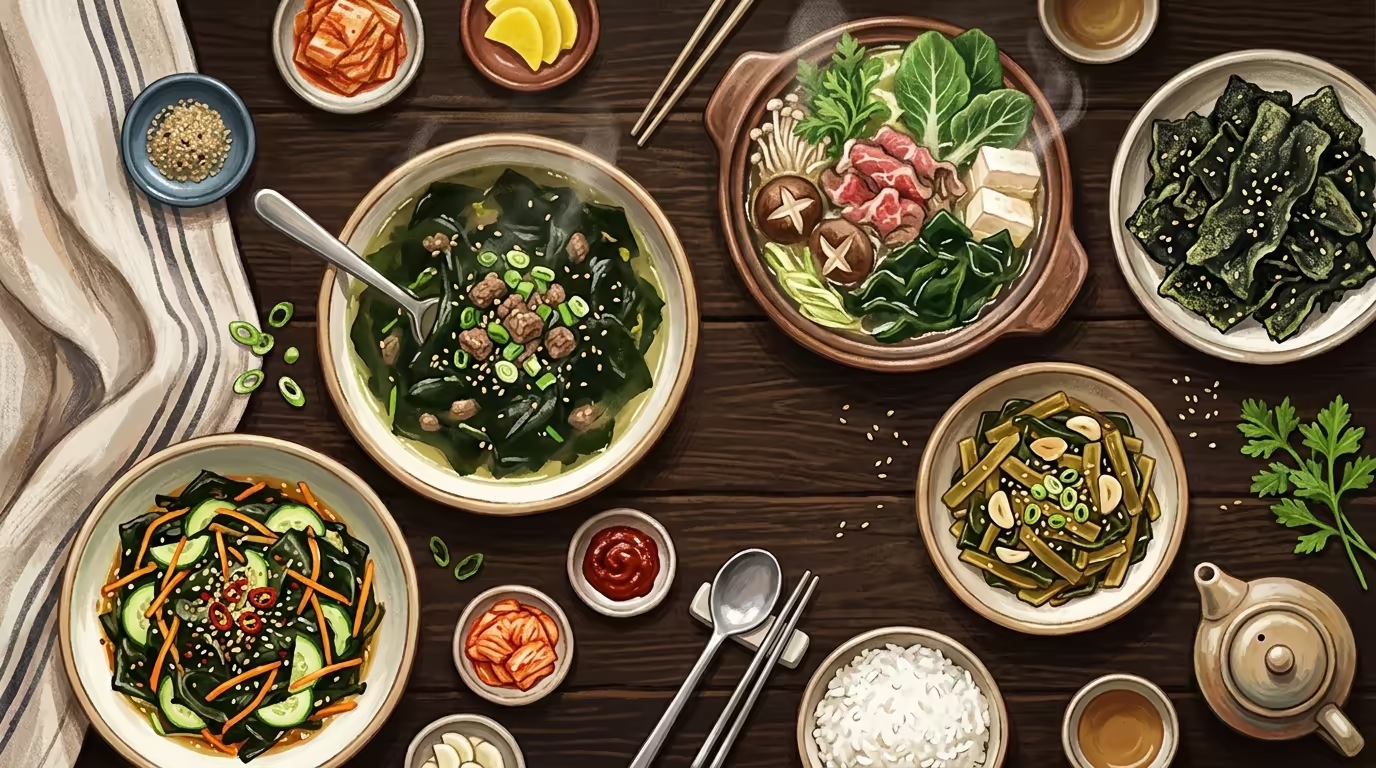
Miyeok-guk / Seaweed Soup (the absolute classic)
EasySimmered with beef or mussels, it produces a deeply savory, umami-rich broth. Gijang seaweed stays intact even after 30 minutes of boiling, preserving that satisfying chewy texture.
Cho-muchim / Sweet-Tangy Seasoned Salad
EasyBlanch briefly, then toss with vinegar, sugar, and gochujang (chili paste). A refreshing summer dish that instantly revives the appetite.
Naeng-guk / Chilled Seaweed Soup (summer specialty)
EasyBlanched seaweed, cucumber, and vinegar in a cold broth — done! One bowl banishes the summer heat in an instant.
Julgi-bokkeum / Stir-Fried Stems (the ultimate side dish)
ModerateCut the thick stem portions and stir-fry in perilla oil. The wonderfully chewy, springy texture is genuinely addictive.
Twigak / Crispy Fried Chips (crunchy snack)
ModerateDeep-fry dried seaweed until golden and crispy — it becomes a chip-like snack that both kids and adults love.
Shabu-Shabu (elegant dining)
ModerateDip fresh seaweed briefly into simmering broth. Watch as it instantly transforms to a vivid green — the crisp, delicate texture is exquisite.
Smoothies & Desserts (a surprising twist)
EasyBlend blanched seaweed with banana and yogurt for a nutrient-packed smoothie. Seaweed ice cream and cookies have also become trendy lately!
How to pick the best quality — Expert tips from a veteran
“You can spot quality with your eyes, but touching it makes you certain. If the leaf is thick yet supple, and when you smell it there’s nothing fishy — just pure ocean scent — that’s the real deal.”
— Local fisherman (51 years of experience)
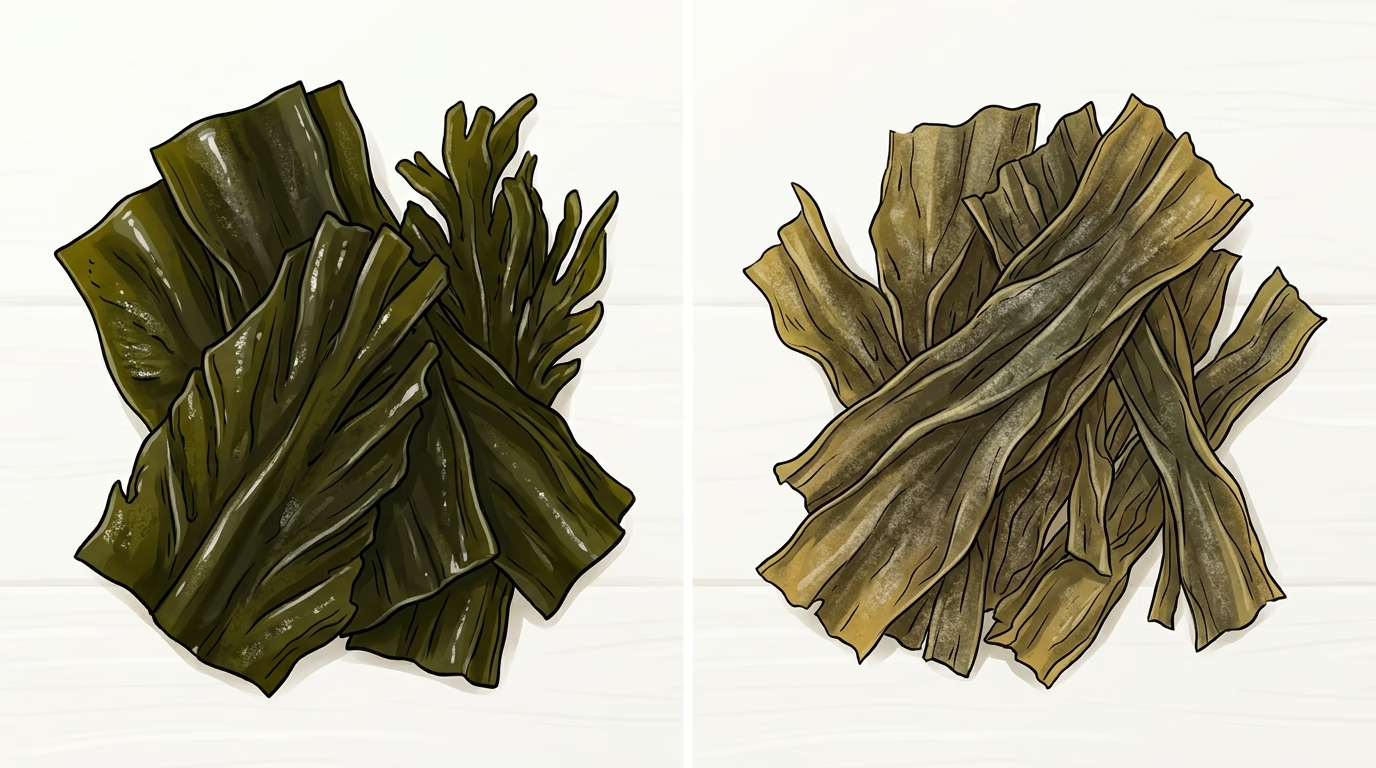
Check the color
Fresh seaweed retains its chlorophyll, so the color stays deep and rich. Like a wilting sunflower losing its vibrancy, aging causes the pigment to fade.
Feel the thickness
Seaweed that grew slowly in cold currents develops dense tissue, making it thicker. Greater thickness generally means higher alginate content.
Smell it
Properly dried products give off only a gentle sea breeze aroma. Inadequate drying invites mold growth.
Look for the Geographical Indication mark
The Geographical Indication mark can only be applied to government-certified products. It’s the most reliable way to avoid counterfeits.
Frequently Asked Questions
Q. How is Gijang seaweed different from seaweed grown elsewhere?+
The biggest difference is leaf thickness and texture. Because it grows where cold currents from Korea’s eastern coast meet warm currents from the south, the leaves are 1.5–2 times thicker and won’t turn mushy even after extended boiling. Alginate content is also over 20% higher, making it nutritionally superior.
Q. Should I buy fresh or dried?+
If you’re visiting between February and May, definitely try fresh! The flavor of just-harvested seaweed is truly extraordinary. Outside that window, high-quality dried products let you enjoy excellent taste all year long. Dried versions are also far more convenient to store.
Q. How can I avoid counterfeit products?+
Look for the "Geographical Indication No. 6" mark on the packaging. Only products verified by the Korean Ministry of Oceans and Fisheries can carry this seal. When buying at traditional markets, you can also ask vendors for a certificate of origin.
Q. How much should I eat per day?+
About 5–10 g of dried seaweed per day is plenty. It expands 7–10 times when soaked, so a small amount goes a long way. Since seaweed is rich in iodine, anyone with thyroid conditions should consult their doctor first.
Q. How should I store it?+
Dried products keep for over a year when stored in a cool, dry place away from direct sunlight. An airtight seal is even better! Fresh seaweed should be refrigerated and consumed within 3–4 days. For longer storage, blanch lightly and freeze.
Q. Does it help with weight management?+
Rehydrated seaweed contains only about 18 kcal per 100 g — practically zero-calorie! Yet its high dietary fiber (alginate) content provides substantial satiety. In Japan, it’s even nicknamed "the ocean’s diet food."
Q. Is it safe for children?+
Absolutely! Rich in calcium and minerals, it’s excellent for growing kids. Serve it as miyeok-guk or crispy fried chips (twigak) and children will love it. Just keep portions moderate to avoid excessive iodine intake.
This ocean’s treasure — See for yourself!
With its Geographical Indication certification and distinctive deep flavor,
consult the 12-month harvest calendar to visit at the perfect time —
or order online from trusted local sources!
Sources & references: NIFS Seafood Composition Table 9th Ed. · Ministry of Oceans and Fisheries GI Registry (2012) · Statistics Korea Fishery Production Survey (2024) · Gijang County Fishery Report (2024) · Korea Maritime Institute (KMI) Distribution Analysis · KIOST Ocean Current Survey · Korea Hydrographic and Oceanographic Agency Seabed Maps · Korean Journal of Nutrition Vol. 52 Postpartum Nutrition Research. This guide is based on local fishing expertise and official data from the institutions listed above. Information current as of April 2026.
This guide was produced by Busan Insight, operated by Jang-ssi Haenyeo-jip, Yeonhwa-ri Main Branch. Jang-ssi Haenyeo-jip is a seafood restaurant in Gijang specializing in live-fish sashimi, grilled abalone, and abalone porridge, drawing on 51 years of experience in these waters to create regional seafood information guides.